Aerodynamic Design
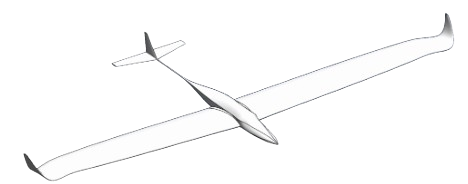
Depicted here is the initial concept look of the aircraft during its early design phase. Back then, it had only a 1 meter wingspan and arguably very exaggerated winglets.
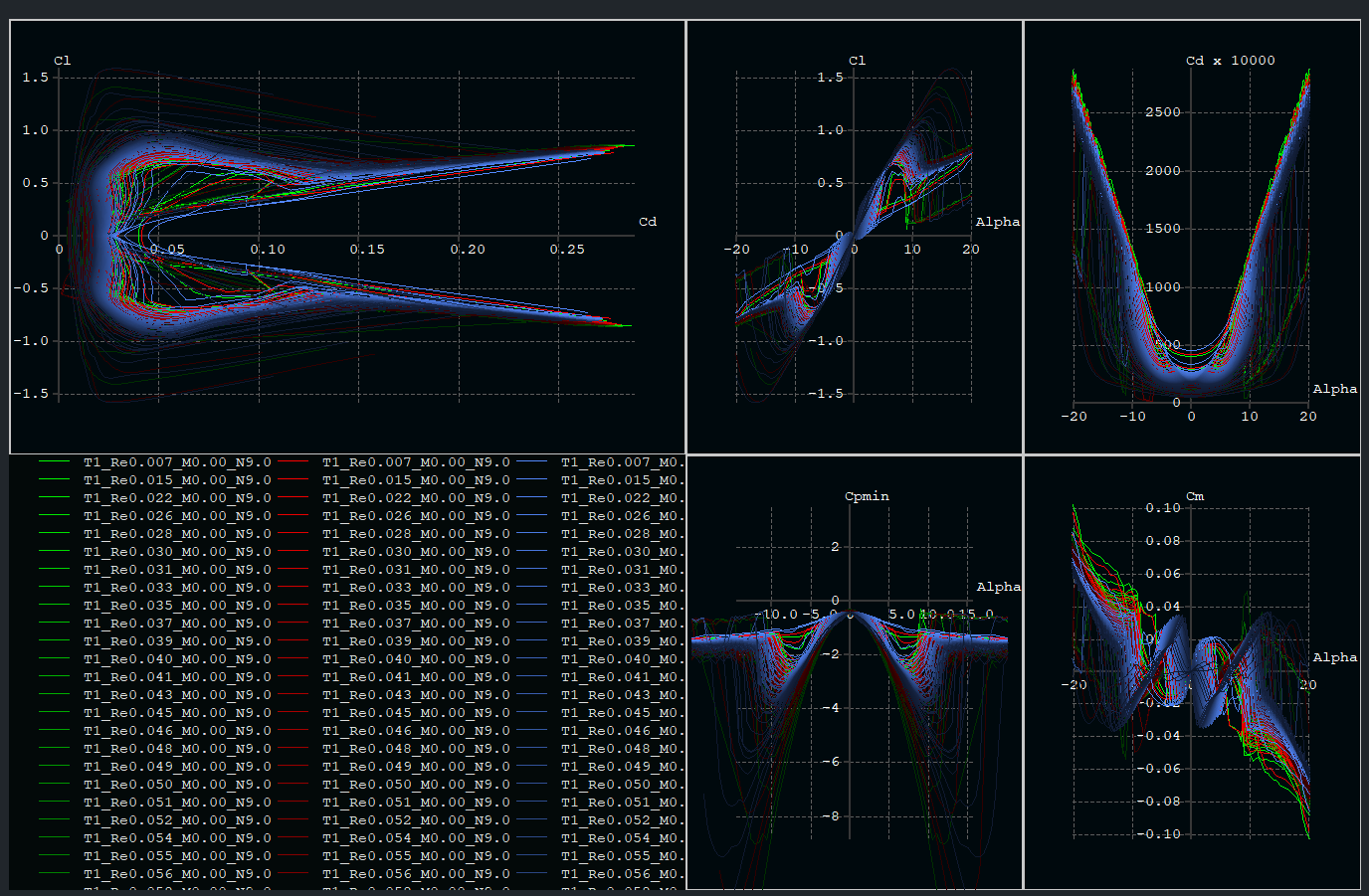
Aerodynamic analysis
We developed a wing with characteristics best suited to our flight profile. After a reasonable period of targeted optimization, we advanced to the evaluation and refinement of the remaining aerodynamic properties.
Coefficients of pressure vs of lift/drug (bottom of the page for explanation).
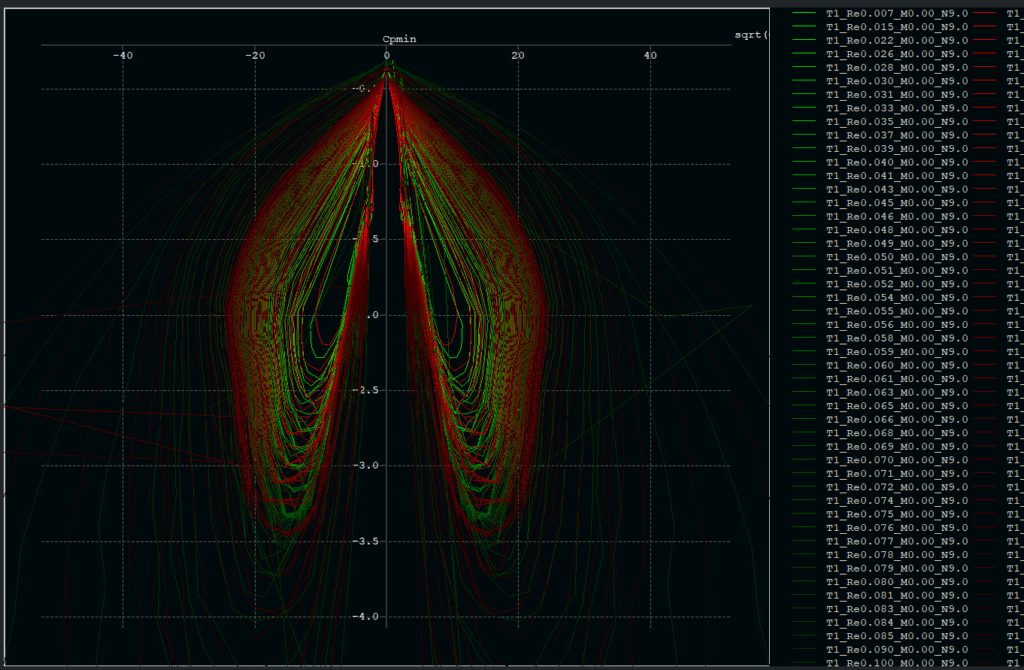
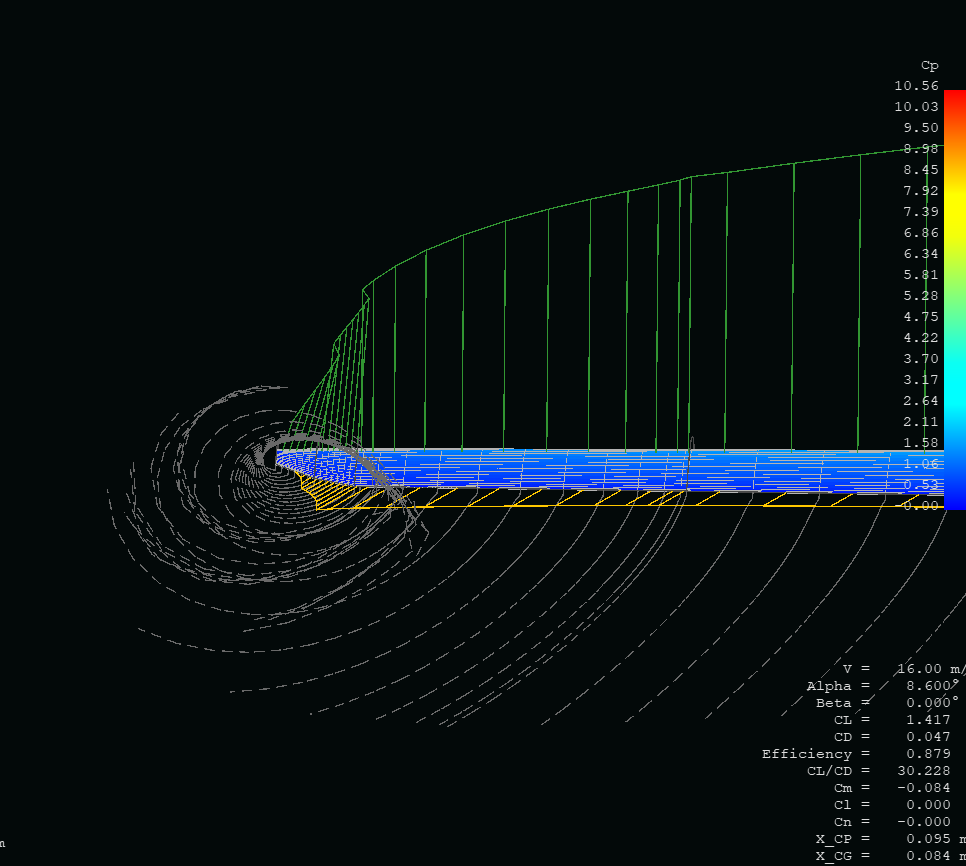
Determining the appropriate wing coefficients and selecting the optimal configuration for the design involved evaluating aerodynamic performance parameters, stability requirements, and structural constraints. This process required comparing multiple coefficient sets, validating their effects on lift, drag, and control characteristics, and identifying the configuration that best aligned with the overall performance objectives.
Structural Design
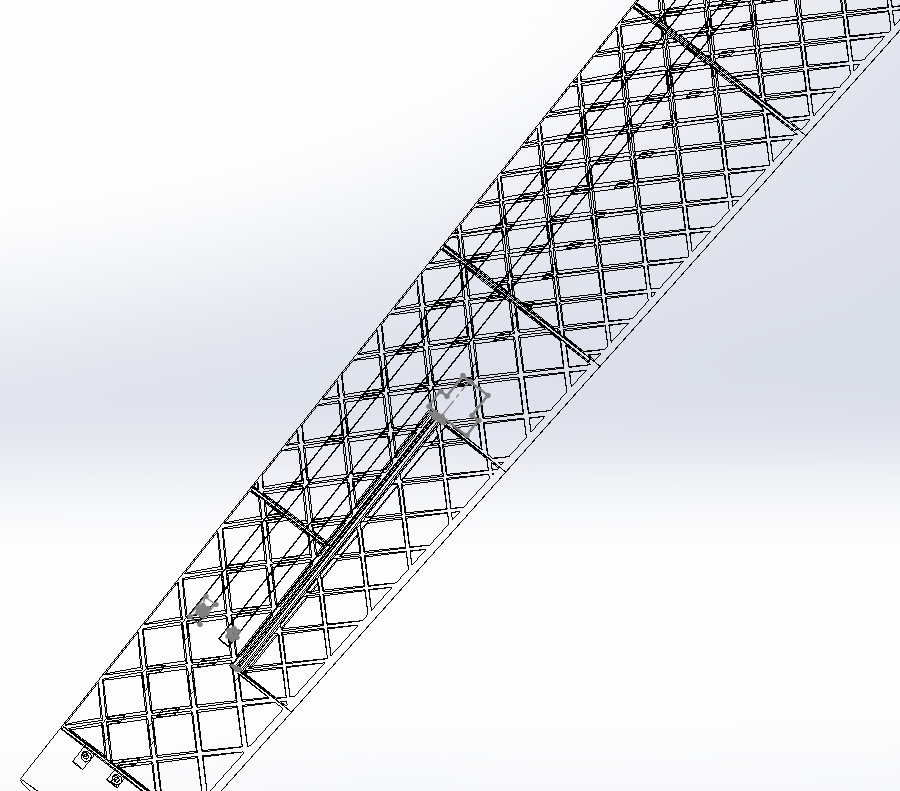
The primary objective is to minimize weight. The structural analysis of the SDX1 was significantly prolonged due to issues associated with the selected materials. These challenges were ultimately resolved, leading to refined geometric solutions and cost savings by eliminating the need for higher-priced materials.
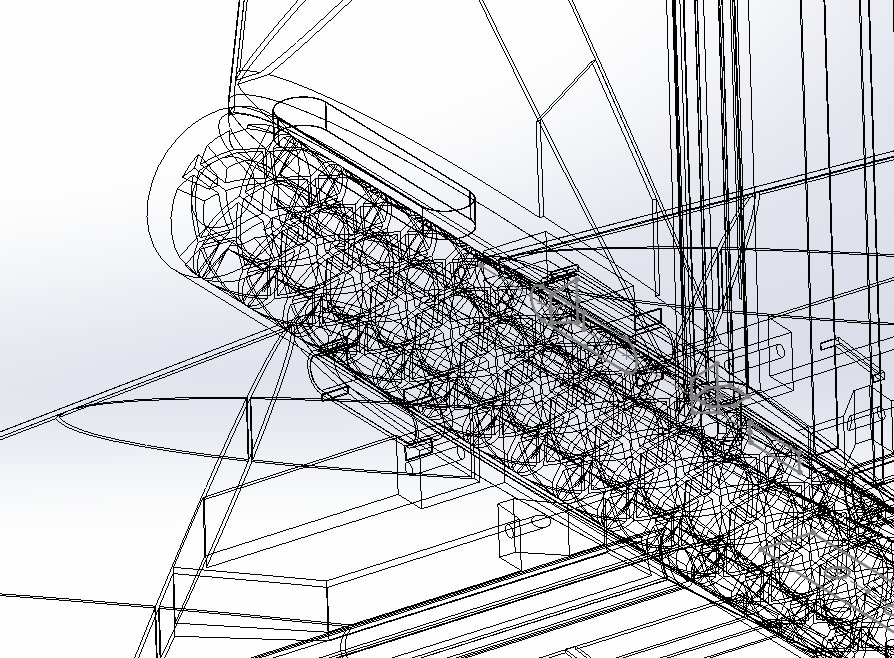
Wireframe CAD model of tail.
Manufacturability
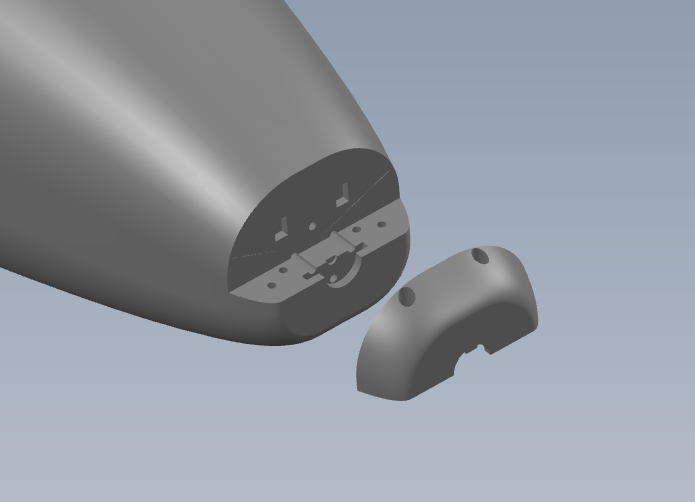
Ensuring manufacturability required integrating practical features into the design, including reliable connection interfaces between components, dedicated channels for routing wiring, and properly defined housings for the motors. These considerations were incorporated to support efficient assembly and consistent production quality.
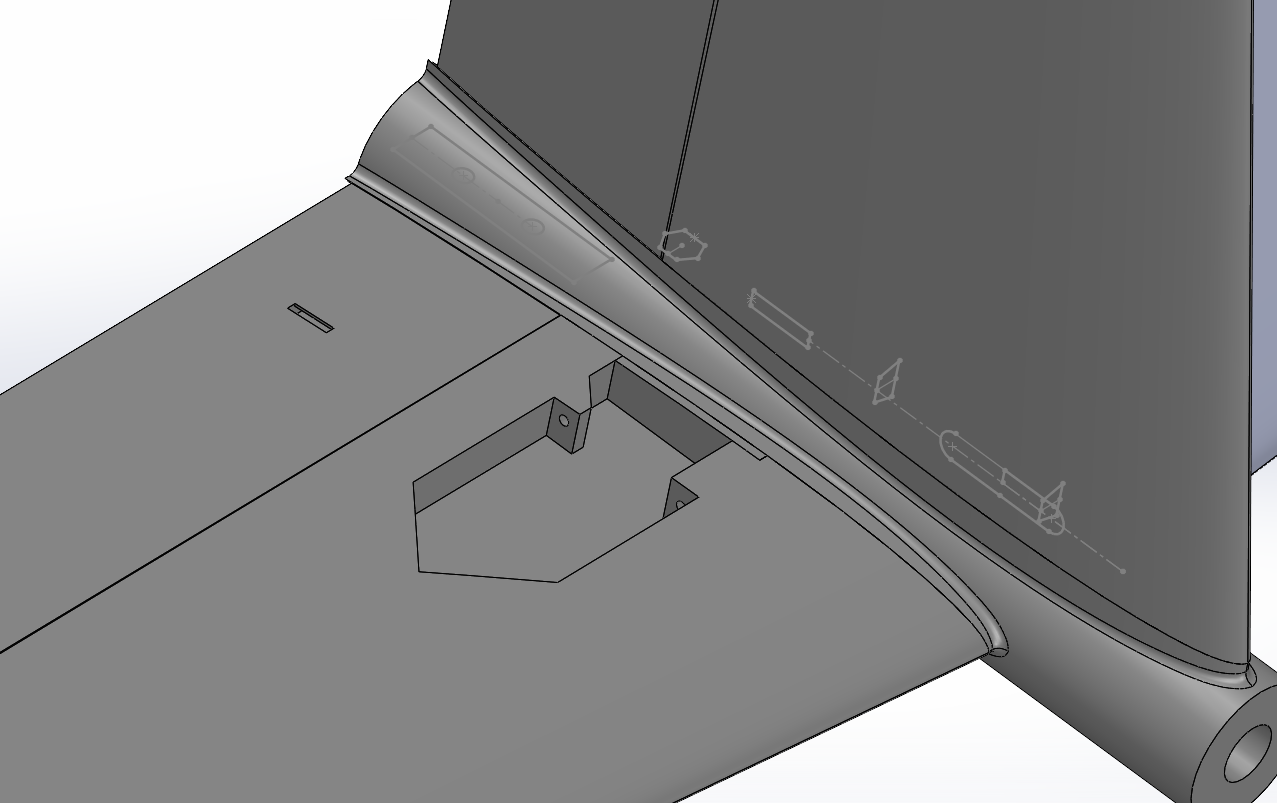
The End Result
SDX1 assembled
*(All the included photos and models are of no real context and exist just for presentation purposes, if you want to see the real data join the team ; )